The Architecture Problem
Why 80% of AI Implementations Fail
78% of enterprises have AI budgets. Only 5% of corporate AI pilots produce measurable business value.
The problem is never the technology. It's the architecture underneath.
The Five Failure Modes
After years of building at the intersection of business architecture and AI deployment, the same five patterns emerge in nearly every failed implementation. They are structural problems — not technical ones.
Failure Mode 1
Automating Broken Processes
If the workflow was already tangled — too many handoffs, unclear ownership, decisions routing through a single person — AI doesn't fix it. It accelerates the tangle. This is the most common failure mode: companies take a process that doesn't work and make it run faster. Faster broken is still broken.
Failure Mode 2
Tool Adoption Without Organizational Change
Installing AI tools is not transformation. If the org chart, decision rights, and workflows don't change, the tools sit unused or underused. The subscription runs. Nobody uses it consistently. Six months later someone asks what happened to the AI initiative.
Companies that treat AI as end-to-end workflow transformation see >75% of steps improved. Those that treat it as task-level automation see <25%.
Failure Mode 3
The Passive Acceptance Trap
When AI generates outputs and humans rubber-stamp them without critical evaluation, the business doesn't get smarter — it gets more confident in unchecked work. Real AI fluency isn't writing clever prompts. It's the organizational ability to think critically with machines — to know when to trust the output, when to challenge it, and when to override it.
Failure Mode 4
No Governance Layer
Deploying AI agents without structural governance is deploying aircraft without air traffic control. Who reviews what agents produce? Who decides when to override? Who owns the outcomes when an agent makes the wrong call? Most implementations skip governance entirely. The result: no accountability, no learning loop, no way to course-correct.
Failure Mode 5
Killing the Momentum Too Early
There's a well-documented pattern in technology adoption: productivity dips before it rises. Organizations must run two systems simultaneously during transition — the old way and the new way. This takes time, creates friction, and temporarily reduces output. Most companies see the dip, panic, and pull the plug — right before the ROI curve inflects upward.
The companies that succeed plan for the valley. They build it into the timeline, set expectations with their teams, and measure leading indicators — not just lagging ones.
What the Successful 5% Do Differently
The companies that extract real value from AI share three structural principles. None of them are about the technology itself.
They start with architecture, not tools.
They audit the business, identify the highest-friction workflow, and redesign the architecture before deploying any technology. The technology serves the architecture — not the other way around. This means understanding decision rights, capacity constraints, and unit economics before writing a single line of code or configuring a single agent.
They pick one workflow and prove it.
Instead of enterprise-wide AI strategies that take years and cost millions, they select one high-return workflow, transform it in weeks, and use the results to fund and justify the next one. Proof beats projection. A working system that produces measurable results is worth more than any business case slide deck.
They build governance from day one.
Every AI system has monitoring, human escalation paths, and clear accountability. Not because regulators require it — because it's how the system gets smarter over time. The governance layer is the learning loop. Without it, there is no feedback mechanism, no way to improve, and no way to catch errors before they compound.
The Historical Pattern
Every major technology shift follows the same pattern. The technology changes what work gets done by humans — and the organizations that design that transition intentionally outperform those that let it happen accidentally.
ATMs and Bank Tellers
ATMs didn't kill bank tellers. They freed them to do advisory work — and the number of bank tellers actually increased. The technology handled the routine transactions. The humans moved to higher-value relationship work.
Spreadsheets and Accountants
Spreadsheets didn't kill accountants. They elevated them from bookkeepers to strategic financial advisors. The technology handled the calculations. The humans moved to interpretation, strategy, and judgment.
AI and Your Team
AI won't eliminate your team. It will force a redesign of what they do. The companies that design that transition intentionally will outperform those that let it happen accidentally. The pattern is always the same: technology handles the routine, humans move to higher-value contributions. The only question is whether you design the transition or react to it.
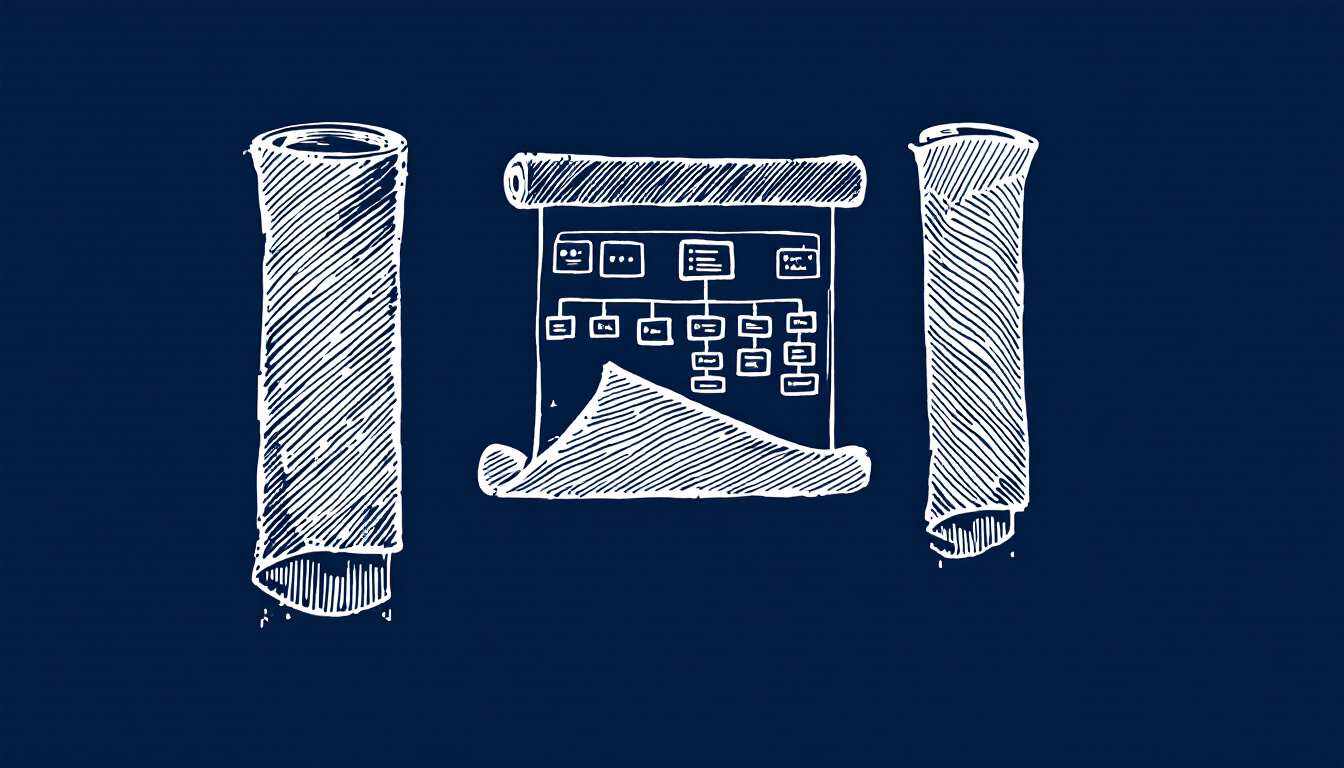
SGW exists in the gap between the 80% and the 5%.
One Workflow. Redesigned Architecture. AI Running It. Measurable Results.
The problem is never the technology. It's the architecture underneath. SGW fixes both.