About
Most Business Architects Study the Problem. Doug Evans Lived It.
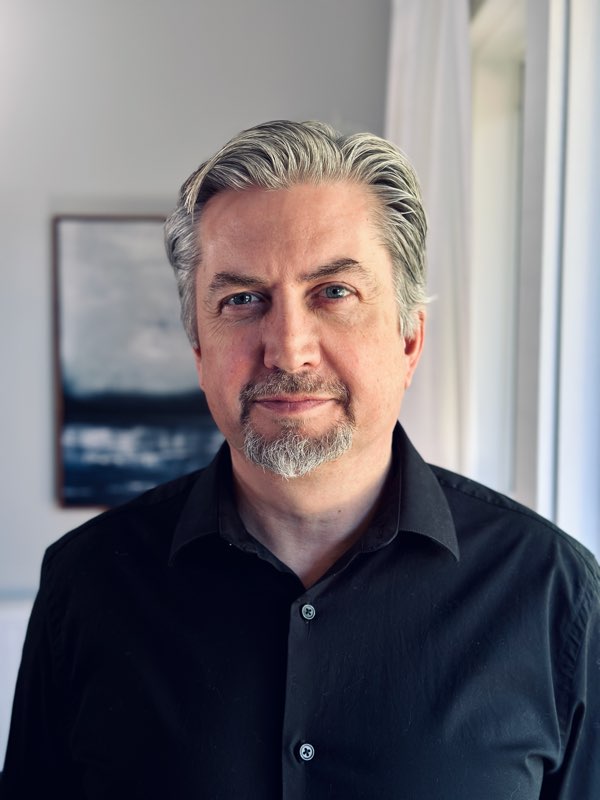
Doug Evans — Structural Growth Architect, founder of Structural GrowthWorks, and the person who sits next to founders when it's time to change the model.
The Short Version
11-year CEO of a national DTC education company and C-level technology executive since 2008, Doug didn't found it — he grew up inside it. He watched it hit the exact ceiling he now helps other founders break through.
The pattern was always the same: good businesses with real demand stalling out — not because of a lack of effort, but because their structure couldn't carry the next level of growth. They'd add more offers, hire more people, push harder on marketing, and end up with more chaos instead of more profit.
The breakthrough came when he stopped treating symptoms and started redesigning the structure itself. Not optimizing. Not advising. Redesigning the architecture — the economics, the decision rights, the operating model — so a few deep changes could create compounding gains.
Then came a second insight: the cognitive shift has to happen before the technical implementation. Founders have to see the business differently before any structural change takes hold. That's why every engagement starts with diagnosis, not solutions — because when founders see the structural portrait of their own business clearly, the right architectural moves become obvious.
That's what Structural GrowthWorks does. Architecture first. Then the AI that makes it compound.
The Rare Intersection
Most business transformation people can't architect AI systems. Most AI people can't redesign a business.
Doug does both. Not in theory — in practice. 15+ years of executive technology leadership, plus hands-on building in the current AI/agentic wave. He writes the code. He builds the agents. He designs the workflows. And he does it in service of the business architecture, not as a standalone technology exercise.
This matters because every transformation now has an AI dimension. But automating a broken model just breaks it faster. You need someone who can see both layers — the business architecture and the technology architecture — and redesign them together.
Currently completing Harvard's Agentic AI Intensive and Northwestern Kellogg's AI Strategies for Business Transformation — not as introductory courses, but as advanced pressure-tests of SGW's architectural approach against the latest enterprise AI research. The courses confirm what the work already shows: most AI failures are architecture failures, not technology failures.
Business Architecture
- 11-year CEO, national DTC education company
- C-level technology executive since 2008
- Unit economics & structural redesign
- Decision rights & governance design
- Operating model architecture
- Workflow architecture & redesign
AI & Technology
- Hands-on agentic AI development
- Harvard — Agentic AI Intensive (2026)
- Northwestern Kellogg — AI Strategies for Business Transformation (2026)
- Agent architecture & governance
- Process automation & workflow design
The Working Model
Architecture before automation.
Every engagement starts by asking what needs to be true about the business before any technology gets deployed. SGW will recommend against AI implementation if the architecture can't support it — even when AI is what the client originally asked for.
Commitment to implementation, not advice from the sidelines.
SGW produces working systems with measurable results — not strategy documents. Founders who engage SGW commit to executing the redesign, not just reviewing it. If the architecture can't change, the engagement doesn't start.
The architecture stands on its own.
Everything SGW produces has value whether or not the engagement continues. No dependency, no lock-in, no hostage situations.
Honest about fit.
If it's not a fit, Doug will say so directly — and usually point toward what would actually help. No fake scarcity, no pressure tactics, no made-up urgency.
Pro-human on AI.
AI should free your people from the 80% of rote work that locks them into underperforming stations — so they can contribute at the level they're actually capable of. The goal is elevation, not elimination. CEOs who get this will build organizations that attract better talent and retain it.
A few deep changes beat a hundred incremental ones.
The work happens at the structural layer where a few decisions drive everything else. This isn't about optimizing around the edges.
What SGW Doesn't Do
- SGW does not sell AI tools, resell software licenses, or take referral fees from technology vendors.
- SGW does not do turnaround work for businesses in financial distress.
- SGW does not offer coaching, group programs, courses, or information products.
- SGW does not provide fractional COO or day-to-day operational management.
- SGW does not deploy AI without a governance layer — every agent system includes monitoring, oversight protocols, and human escalation paths.
About Structural GrowthWorks
SGW is not a personal brand, a content business, or a coaching practice. It's a firm built around a methodology — workflow architecture for founder-led companies.
The work lives at the intersection of business transformation and AI deployment — redesigning the architecture of companies so growth becomes structural, not heroic. Then deploying the technology that makes the new architecture compound.
One methodology. Architecture first. Technology second. Both in the same engagement.
If You Have a Workflow That's Holding Everything Back, Let's Talk.
One workflow. Redesigned architecture. AI running it. Measurable results.